TCS Architecture.
A surface-level physiological sensing architecture that activates only on contact and preserves the familiar behavior of the host surface.
Sensing occurs only at the region of contact.
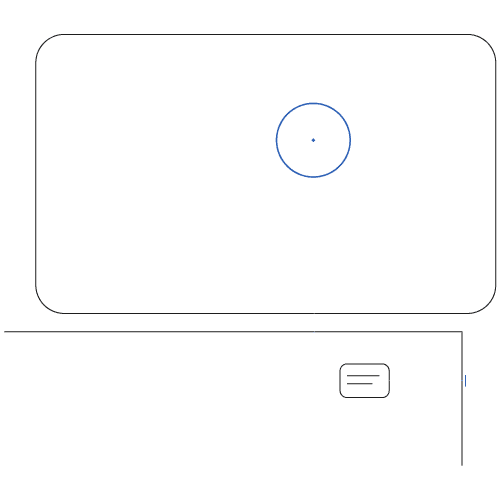
A surface-level physiological sensing architecture that activates only on contact and preserves the familiar behavior of the host surface.
Sensing occurs only at the region of contact.
A contact detection layer identifies touch on the surface and narrows sensing to a local region of interest instead of the full field.
A local cluster of photonic cells in that region activates and records morphology-faithful PPG at the surface.
Signals from the active region may be evaluated for quality and robustness to motion, so sources that do not meet the conditions for use can be excluded or deprioritised.
An arbitration stage identifies at least one suitable source for use and can adapt to changes in conditions during contact.
The interface exposes a disciplined stream of physiological data derived from the promoted source(s) for downstream systems and applications.
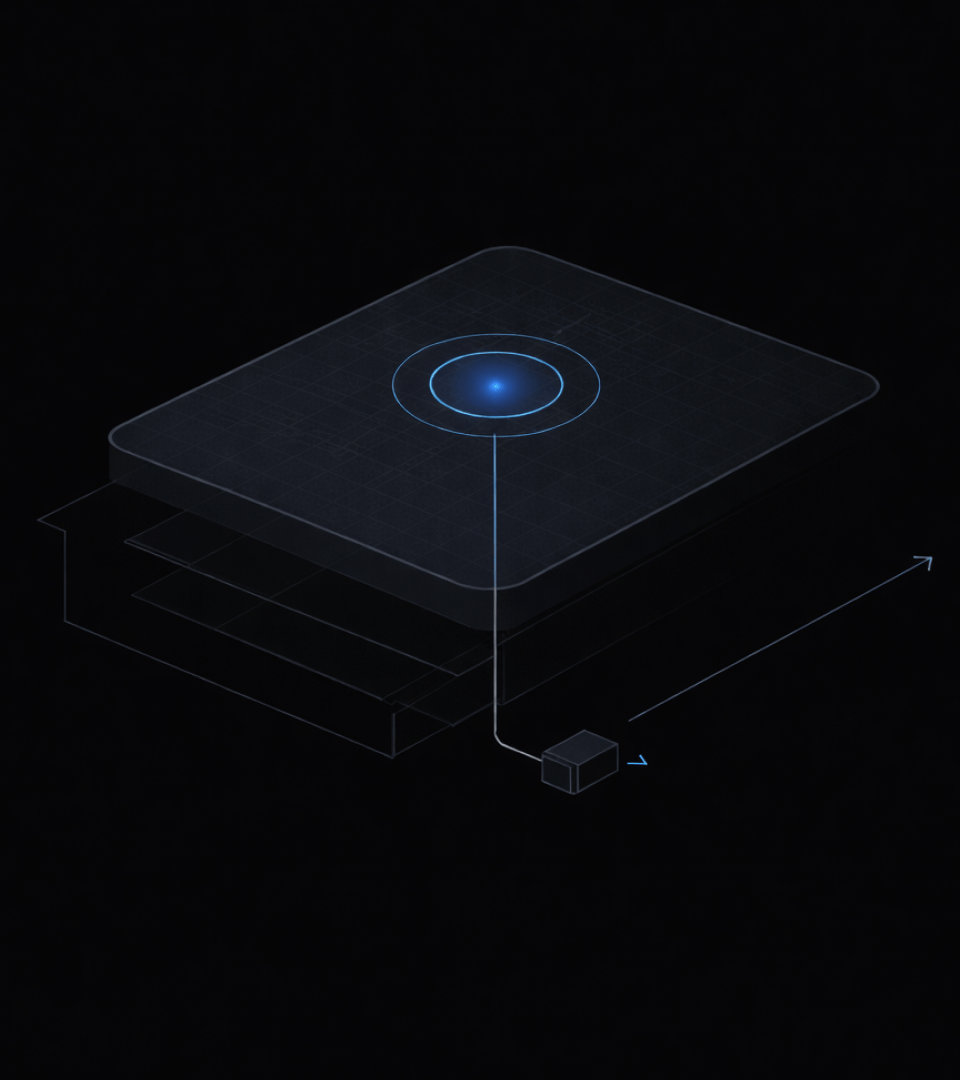
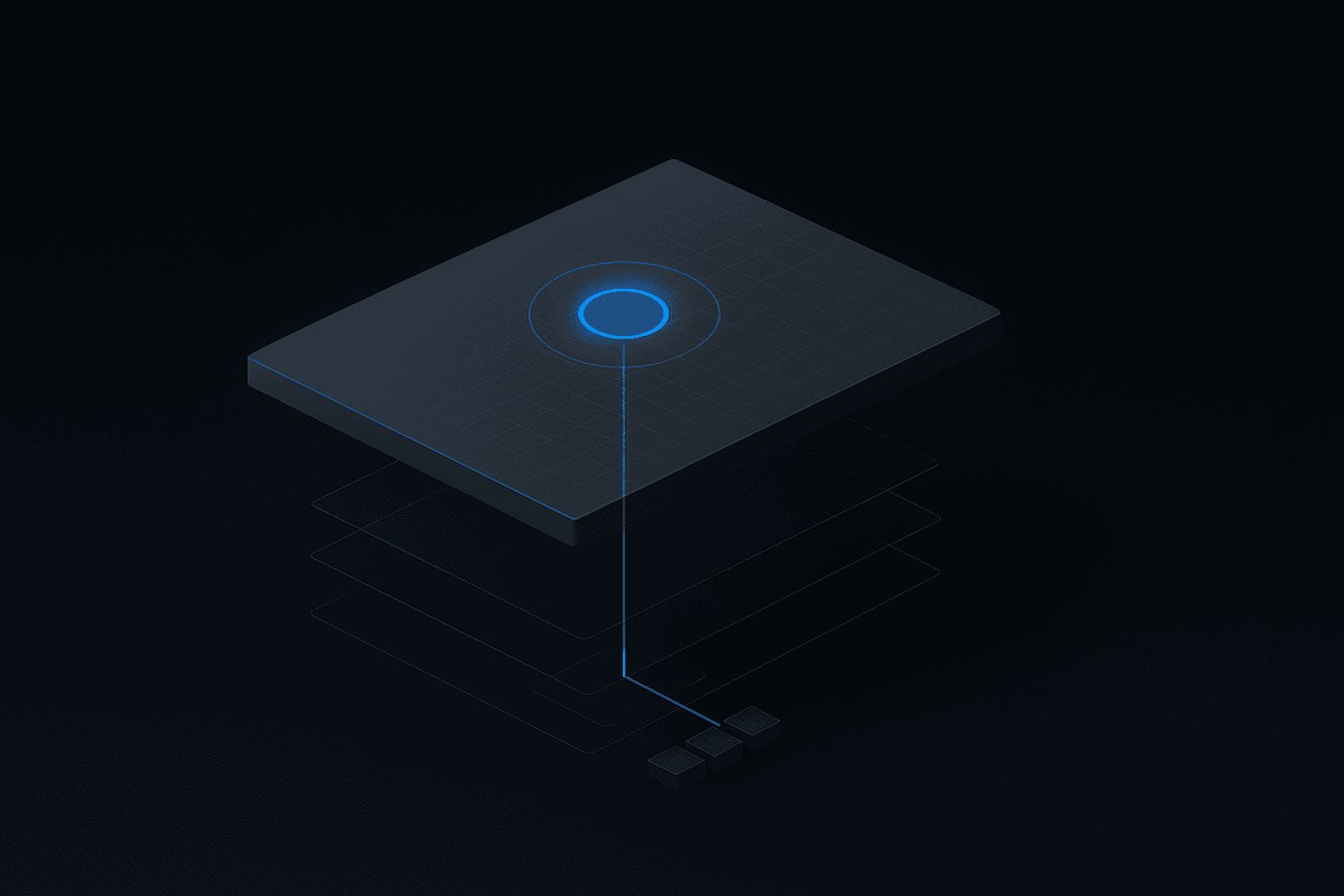
Contact on the surface is detected and narrowed to a local region of interest so that only the relevant sensing elements become active
Contact on the surface is detected and narrowed to a local region of interest so that only the relevant sensing elements become active
Candidate cells in the active region are evaluated for signal quality and robustness. The architecture promotes at least one suitable source for downstream use, with the ability to adapt as conditions change.
Validated physiological data from the promoted source(s) is exported to the host interface as a disciplined stream for downstream use.
TCS should be understood primarily as a surface-level sensing topology with interaction-conditioned admission and suitability gating. It senses subsurface physiological change at the touch surface and never needs to see the user or the environment.
Time-domain physiology, not images.
Camera pipelines derive content from spatial intensity patterns. TCS measures temporal changes in light absorption caused by pulsatile blood flow in microvascular tissue.
Surface interaction, not line-of-sight capture.
TCS operates at the device surface and is configured around contact geometry, rather than field-of-view alignment and subject positioning.
Structured tissue illumination, not ambient light.
TCS uses narrow-band active illumination tuned for photoplethysmography, rather than broadband ambient or scene lighting.
Compact physiological waveforms, not visual data.
TCS outputs time-series biosignals rather than images or video frames, so no faces, backgrounds, or visual scenes are captured or processed.
Note: Comparisons are architectural and illustrative. Implementation and performance depend on embodiment and integration. This section is descriptive and does not define patent claim scope.
TCS is designed with a surface-first privacy posture. The privacy model scales across devices and aligns with the security and governance requirements of OEM hosts.
Minimal, purpose-bound data paths
The system is designed to export only the information required for the intended function, reducing unnecessary data exposure.
OEM-controlled privacy and security posture
Encryption, access control, retention, and policy enforcement are governed by the OEM host as part of its enterprise security framework.
Configurable retention and integration controls
Hosts can define how data is used, retained, or discarded during pilot and production deployments.
Selected insights from TCS architectural whitepapers.
Access in-depth technical insights and research findings.